 SimSmsBox
Short answer: Decide one thing first — will this account ever need a second code? If it will (you might log in on a new device, or you have two-step verification with no recovery email), a one-time activation is the wrong purchase, because the number goes back in the pool within minutes and someone else gets it. Buy a rental you hold for weeks, or Telegram’s own +888 number, which is permanent. If the account genuinely is disposable, a single activation is the cheapest thing that works — cents rather than dollars. What never works, at any price, is a public inbox where the number and its messages are visible to everyone.
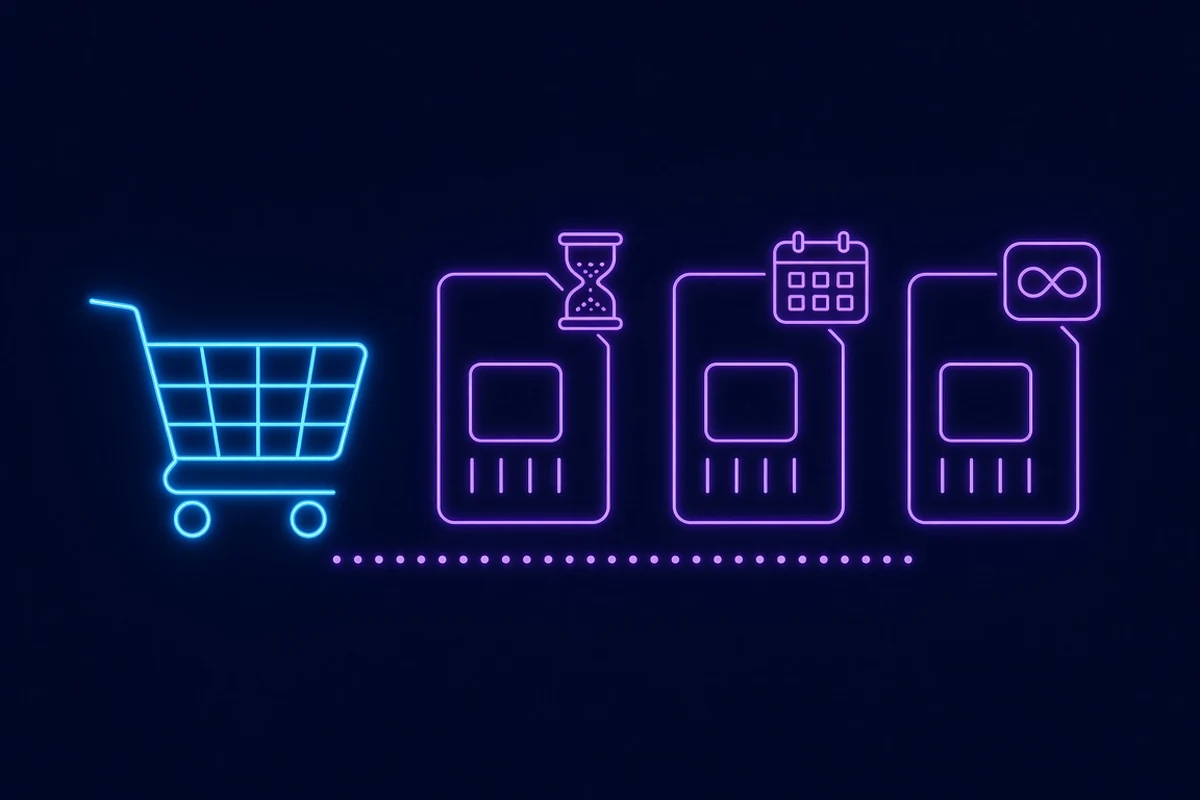
Four products, one search term
| What you buy | Typical cost | You hold it for | Good for |
|---|---|---|---|
| One-time activation | Cents | ~10–20 minutes | A registration you will never need to repeat |
| Rented number | Dollars | Days to months | Accounts that will need more codes |
| Telegram +888 | Tens of dollars | Permanently | A number you want to keep and control |
| A real SIM | Varies | As long as you keep it active | Maximum reliability, minimum convenience |
These are genuinely different goods, and most bad outcomes come from buying the first when the situation needed the second.
The question that decides it
Everything hinges on whether the account needs a second code later. Telegram will ask for one when you:
- sign in on a new phone, tablet or computer;
- get signed out, deliberately or otherwise;
- forget your cloud password and have no recovery email.
With a one-time activation you no longer have the number when any of that happens. Worse, the number has been recycled to another customer — so it is not that you cannot receive the code, it is that someone else will.
Two things defuse this almost entirely, and both are free:
- Set a cloud password with a recovery email. Then your route back in does not depend on the number at all. What the cloud password does is the five-minute version.
- Sign in on a second device while the number is still live, and leave it signed in. Telegram then delivers future login codes into the app rather than by SMS.
Do both and a cheap activation becomes a reasonable choice. Do neither and you have bought a time bomb.
Paying more for the right kind of number
Price differences between numbers are mostly about number type, not vendor margin. Telegram declines some categories outright.
Non-VoIP mobile numbers — real mobile ranges attached to a carrier — pass. VoIP ranges frequently do not, which is why they are cheap. What non-VoIP means and why it passes covers the detection side; real SIM versus virtual covers the supply side.
A second, less visible factor is how many accounts that number has already registered. A heavily reused number carries a reputation, and the symptom is not a clear error — it is a code that never arrives, or an account restricted in its first week. Number reputation explains the scoring behind it. This is the main reason “0.1 cent” numbers underperform: the price reflects how used they are.
Country matters less than people think. Telegram is global and does not prefer a country. Pick whatever is cheap and in stock. Two caveats: a very large gap between your IP’s country and the number’s country can add friction, and — if you plan to subscribe to Premium — your first payment through @PremiumBot is priced by your account number’s country code.
What to avoid
Free public inboxes. The number and every message it receives are on a web page anyone can read. Tens of thousands of people have registered with those numbers, Telegram knows them, and even when a code arrives, whoever else is watching can take the account. What works and what never does goes through the free options individually.
Number generators. They produce digits in a valid format that belong to nobody, so no message can ever arrive. Why generated numbers cannot receive anything is short and worth it if the idea seemed plausible.
Sellers who want to receive the code for you. A service that asks you to hand over the login code — or offers to “register the account and give it to you” — is selling an account it can take back at any time. The mechanism is the same as an OTP bot.
Anything bundled with an app install. Covered in why modified Telegram builds cannot do what they claim.
What it should cost
Rough shape rather than a price list, because stock and country move it:
- One-time activation for Telegram: cents. Service-specific pricing is normally cheaper than a generic number because it runs on a dedicated route.
- Short-term rental: low single-digit dollars for days, more for weeks.
- Telegram +888: tens of dollars, one-off, bought through Fragment rather than any third party.
- Real SIM abroad: the SIM plus whatever keeps it active.
The number that matters is not the unit price but the cost per successful registration. Three failed cheap attempts cost more than one that works, and how to think about that properly is the general version of the argument. The same logic applied to renting is in activation versus rental, and the broader market of virtual numbers beyond Telegram is in where to buy a virtual number.
Before you pay, check these five
- Does the listing say non-VoIP, or at least name the number type? Vendors who cannot tell you are reselling whatever their upstream had.
- What happens if no code arrives? Automatic refund and release, or nothing? This clause is the whole difference between cheap and expensive in practice.
- How long is the receive window? Ten minutes is common. Know it before you start, so you are not still filling in a form when it closes.
- Can you extend or re-rent the same number? Matters enormously for accounts you intend to keep.
- Is there a Telegram-specific option? Its existence is a decent signal the provider maintains a working route rather than pointing generic stock at it.
The general checklist for judging a provider is in how to use an SMS platform.
The sequence that works
- Buy the number before opening Telegram, so you are not racing the receive window.
- Enter it in international format, leading zero removed.
- Wait. If nothing arrives in about two minutes, release it and take another — do not keep tapping resend, which triggers rate limiting and can get the number flagged.
- The moment the account exists: set a cloud password and add a recovery email.
- Sign in on a second device while the number is still yours.
- Check the two number-privacy settings — a platform number is not automatically private, and both switches still apply.
If the number is rejected before any code is sent, that is a different failure with five specific causes, only one of which is about the number itself.
Common questions
Will Telegram ban an account registered this way? Not for the number alone. Bans follow behaviour — mass-messaging strangers, joining hundreds of groups on day one. A fresh account should behave like a person for its first week.
Can I move the account to my real number later? Yes, and it keeps everything. Changing the number takes about thirty seconds.
Do I need to buy a number at all? Not if you are willing to use your own, and not if you have a spare SIM. The full set of routes is worth a look before spending anything.
Is +888 better than a rental? Better if you want permanence and control, worse on price, and it needs a crypto wallet to buy. For one account you intend to keep for years, it is the cleanest option available.
Wrapping up
Match the purchase to the lifespan of the account. Disposable account, disposable number, a few cents, done. An account you will still want next year needs either a number you keep holding or — much cheaper — a cloud password, a recovery email, and a second signed-in device, set up in the first five minutes while the number is still yours. That five minutes is worth more than any amount you could spend on a better number.