 SimSmsBox
 Quick answer: Phone number reputation is a risk score that services attach to your number before they trust it. Using signals like the number’s type (real SIM vs VoIP), its carrier, country, age, and past abuse history, a site decides whether to accept it, add extra checks, or reject it outright. A “clean,” real-carrier number sails through; a flagged or VoIP number is where verification often fails.
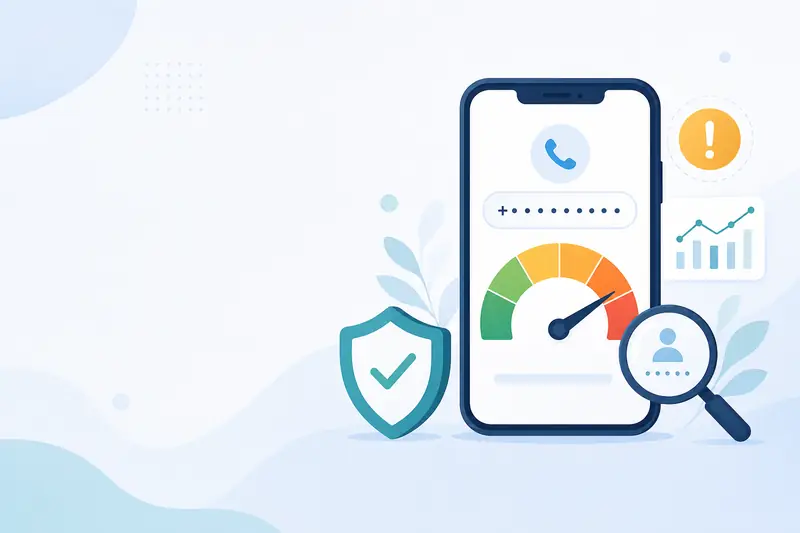
Ever had a valid number rejected at sign-up while a friend’s went through instantly? That’s number reputation at work. Behind the scenes, services run your number through a risk score before deciding whether to send or trust a verification code. Here’s what goes into that score and how to stay on the good side of it.
1. What “reputation” actually measures
Reputation isn’t one number from one company — it’s a blend of signals that fraud and messaging vendors compute in real time. The goal is to predict: is this number likely a real person, or a throwaway used for abuse?
Common inputs include:
- Number type: real mobile SIM vs VoIP vs landline. This is the biggest single factor — see non-VoIP numbers.
- Carrier and country: some carriers and regions carry higher fraud rates.
- Line age and history: brand-new or heavily reused numbers look riskier.
- Recent behavior: many recent verification attempts on the same number raises flags.
2. How services use the score
| Score band | Typical action |
|---|---|
| Low risk (clean, real SIM) | Accept, send code normally |
| Medium risk | Allow but add friction (CAPTCHA, extra step) |
| High risk (VoIP, flagged, reused) | Block, or refuse to send the code |
This is why two numbers that both “work” as phones can get completely different treatment. The score, not the number’s ability to receive texts, decides the outcome.
3. Why VoIP and reused numbers get flagged
Fraud rings historically abused cheap, disposable VoIP numbers to mass-create accounts, so many services now discount or block VoIP outright. Similarly, a number that has verified dozens of accounts recently looks automated. This is the same defensive posture that fights SMS pumping fraud and fake-account abuse — the trade-off is that legitimate users on VoIP or shared numbers sometimes get caught in the net.
4. How to improve your odds
- Prefer real, non-VoIP mobile numbers for services that are strict — this single choice fixes most rejections.
- Match number country to the service’s expectations where relevant, as with region-specific verification quirks.
- Don’t hammer a number with repeated attempts; back off and retry later if a code doesn’t arrive.
- Pick quality sources, since where a number comes from drives its reputation — background in SMS number sourcing.
FAQ
Q: My number is real and active — why was it rejected? Reputation looks beyond “does it work.” Carrier, country, line age, or recent reuse can still push the score into a risky band.
Q: Can I check my own number’s reputation? Not directly for most consumers; scores are proprietary. In practice, using a real, non-VoIP number from a reputable source is the reliable fix.
Q: Does reputation change over time? Yes. A number’s score shifts as its usage history and associated behavior change.
Takeaway
Phone number reputation is the hidden gatekeeper of modern verification: before a service trusts your number, it scores the number’s type, carrier, age, and history — so a clean real-SIM number passes easily, while VoIP or over-used numbers are exactly where codes get blocked. Choosing the right number type is the most effective lever you control.