 SimSmsBox
 Short answer: It depends whether you bought an inbox or a line. A number rented from an SMS platform is a read-only inbox and cannot send. VoIP apps and CPaaS numbers can send — but only after A2P registration and carrier approval, not the moment you sign up.
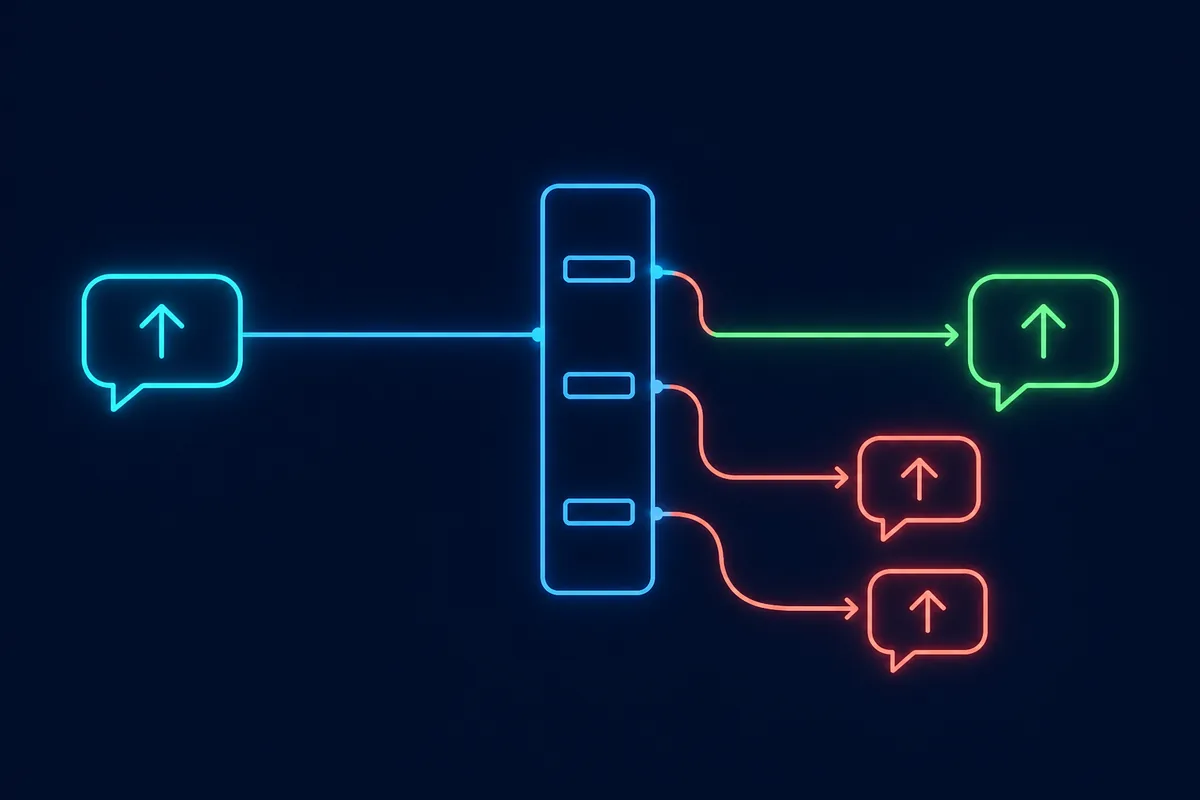
Most people assume that anything which receives can also send, because the number in their pocket does both. In the virtual-number market those are two separately priced capabilities with very different gatekeeping.
Receiving vs sending
| Receiving | Sending | |
|---|---|---|
| Technical prerequisite | A live number with terminating equipment | A live number plus an approved outbound route |
| Regulatory load | Essentially none | A2P registration, content templates, opt-out handling |
| Abuse liability | Passive, light | Active — it lands on whoever holds the number |
| Billing | Per code or per number | Per message, with wide destination spreads |
| Typical product | SMS platform pools | CPaaS, enterprise routes, VoIP apps |
The rulebook on the sending side is A2P messaging — see what is A2P SMS. In the US the specific regime is 10DLC, covered in what is 10DLC.
Sending ability, by type of number
- SMS platform pool numbers: no. The web page shows you what arrived; the platform never handed over control of the line. The number also rotates back to the pool within minutes — see SMS number sourcing explained.
- VoIP app numbers (Google Voice, Skype): yes. Built for person-to-person conversation. Dozens of messages a day are fine; hit the throttles and you get limited, and bulk marketing is out of scope.
- CPaaS numbers: yes, after registration. You provision the number, declare the use case, submit templates, and only then get outbound enabled. In the US that also means brand and campaign registration.
- Carrier second line / eSIM: yes. Functionally no different from your primary line.
Why platforms don’t enable sending on pool numbers
Three reasons, the same shape as the argument in can a virtual number make calls:
- Abuse control. A pool of freely sending numbers becomes a phishing cannon within hours — see what is smishing.
- Reputation collapses instantly. Once a range is tagged as a spam source, delivery rates fall for every user of that pool, not just the offender. The mechanism is in phone number reputation.
- The liability chain is unmanageable. The numbers are registered to the provider, so the legal consequences of outbound content are too.
When a service requires you to reply by text
This is where a read-only inbox genuinely blocks you. Several flows ask you to send a message:
- Reply
YorYESto confirm a subscription. - Text an activation phrase to a short code.
- Reply with a keyword to prove you control the line.
A pool number fails all three. Three workable responses:
- Change the verification channel. Email, an authenticator app, or voice verification are usually offered as alternatives — see SMS vs email verification.
- Change the type of number. Use a two-way VoIP line or a carrier second line just for that step.
- Ask whether two-way is supported. A few providers offer limited reply capability on specific ranges. Confirm before you pay rather than assuming.
Why short codes dominate these flows is explained in short code vs long code SMS, and sender naming rules are in what is an SMS sender ID.
If your real goal is bulk notifications
Then you don’t want a virtual number, you want a proper enterprise route:
- Classify the traffic first — transactional codes, notifications, and marketing face different approvals and prices.
- Prepare templates and an opt-out path. Missing either fails review.
- Expect less than 100% delivery. Carrier-side filtering never goes away — see why carriers filter SMS.
- For programmatic control, the receiving-side shape is in SMS platform API; sending has its own API per provider.
Three things not to do with a virtual line
- Bulk marketing without registration. The route gets shut down the same day, and penalties are possible.
- Impersonating an official sender. That is spoofing — see what is phone number spoofing.
- Replying to something important from a disposable number. The moment it rotates, the thread and every follow-up check are gone.
Summary
Receiving buys an inbox; sending buys a route. SMS platforms sell the first, CPaaS and VoIP sell the second. When a flow demands a reply by text, switch to a two-way line instead of retrying on a read-only one.