 SimSmsBox
 Quick answer: Phone number spoofing is faking the caller ID or SMS sender so a call or text appears to come from a number that isn’t really the sender’s — often a bank, a government office, or even your own number. It’s the trust trick behind many smishing and voice scams. You can’t reliably tell a spoofed number from a real one, so the defense is to verify through official channels, never through the incoming message.
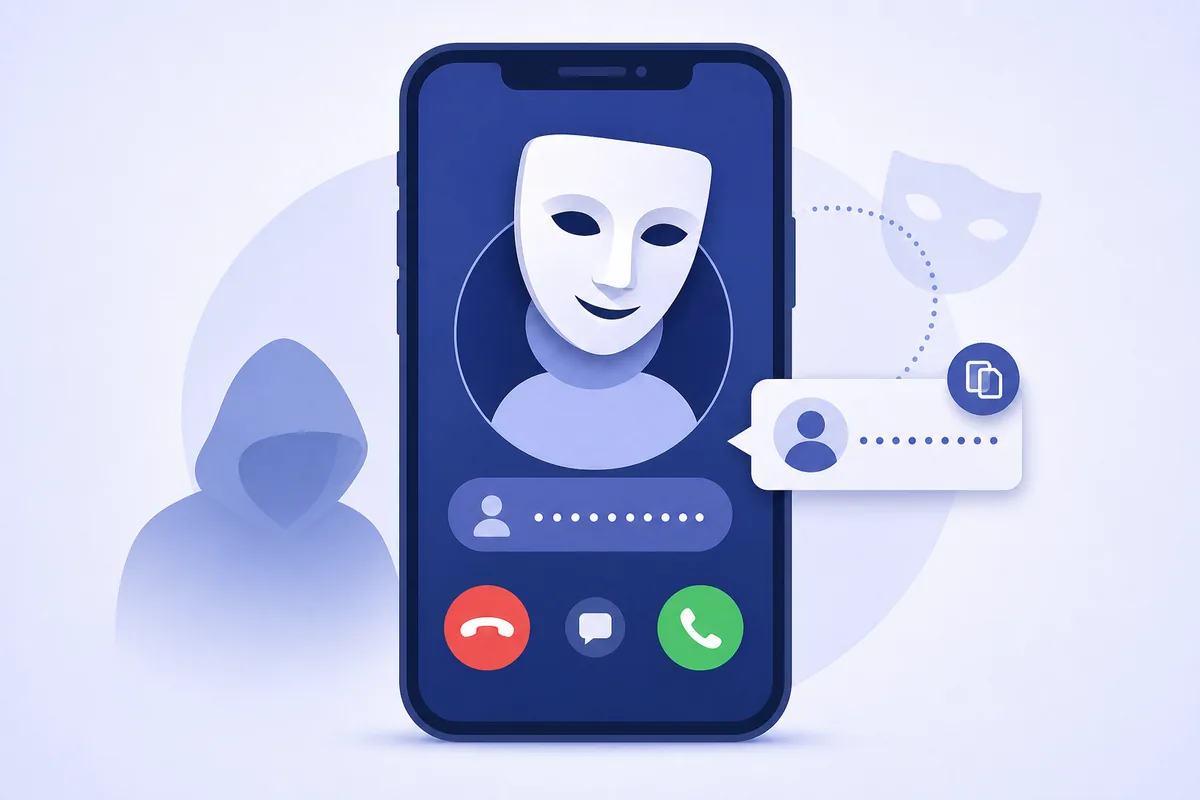
Caller ID feels like proof of who’s calling. It isn’t. The number shown on your screen is just a label the sender supplies, and it can be forged. Spoofing exploits that gap between “the number I see” and “who is actually calling.”
1. How spoofing works
When a call or text is placed through certain internet-telephony systems, the sender can set the “from” number to almost anything. The network passes that label along and your phone displays it as-is. There’s usually no check that the sender actually owns the number.
Scammers use cheap tools to:
- Impersonate a trusted org — your bank, a delivery service, the tax office.
- Neighbor-spoof — show a local area code so you’re more likely to pick up.
- Spoof your own number — unsettling, and used to bait a callback.
2. Spoofing vs number masking vs porting
These get confused, but they’re different:
| Term | What it does | Who benefits |
|---|---|---|
| Spoofing | Fakes the displayed sender number | Usually scammers |
| Number masking | Hides both real numbers behind a legitimate proxy | Privacy for both parties |
| Port-out fraud | Steals your number by moving it to a new SIM | Attacker takes over your number |
Spoofing fakes what’s shown; masking legitimately substitutes a number; porting steals the number itself.
3. Why it’s so hard to stop
The old phone signaling system was built on trust between carriers, with no way to prove a caller owns the number they present. Anti-spoofing frameworks (like STIR/SHAKEN) add cryptographic “attestation” so carriers can label calls as verified, and they help — but coverage is uneven across countries, older networks, and text messaging, so plenty of spoofed traffic still gets through.
4. How to protect yourself
- Treat caller ID as a hint, not proof. A familiar name or local number means nothing on its own.
- Never act on urgency from an inbound contact. Hang up and call the official number on your card or the company’s website.
- Don’t share codes or passwords by phone, even if the caller “already knows” some of your details.
- Don’t call back unknown numbers from missed calls or voicemails pushing you to act.
5. What this means for verification codes
Spoofing matters because a scammer who sounds like your bank may try to talk you out of a real verification code they just triggered on your account. The rule is absolute and channel-independent: a legitimate company never calls or texts to ask for your code. Whether a code reaches a SIM or you receive it online, read it for logins you started and never repeat it to an inbound caller — no matter what their caller ID says.
FAQ
Q: Someone said they got a scam call from my number — was I hacked? Almost certainly not. Scammers spoof random real numbers as the “from” field; your line and account are usually untouched. There’s little you can do except warn contacts.
Q: Can I tell if a number is spoofed before answering? Not reliably. Some carriers label suspected spam or “verified” calls, but a clean-looking number can still be fake. Verify independently.
Q: Is spoofing illegal? Spoofing with intent to defraud or cause harm is illegal in many countries, but enforcement is hard because the traffic often originates abroad or through disposable services.
Takeaway
Phone number spoofing fakes the sender shown on your screen, turning caller ID into a scam prop. Because you can’t trust the displayed number, verify every urgent request through an official channel — and never hand a verification code to anyone who calls or texts you, regardless of what their number claims.