 SimSmsBox
 Quick answer: Mobile carriers filter SMS to protect subscribers from spam, fraud, and phishing — so legitimate messages sometimes get blocked along with the bad ones. Filters flag traffic by content (spammy words, risky links), sender reputation, and volume/velocity. If your verification texts aren’t arriving, carrier filtering is a common cause, and the fixes are registration (10DLC, sender IDs), clean templates, and reputable routes — not just resending.
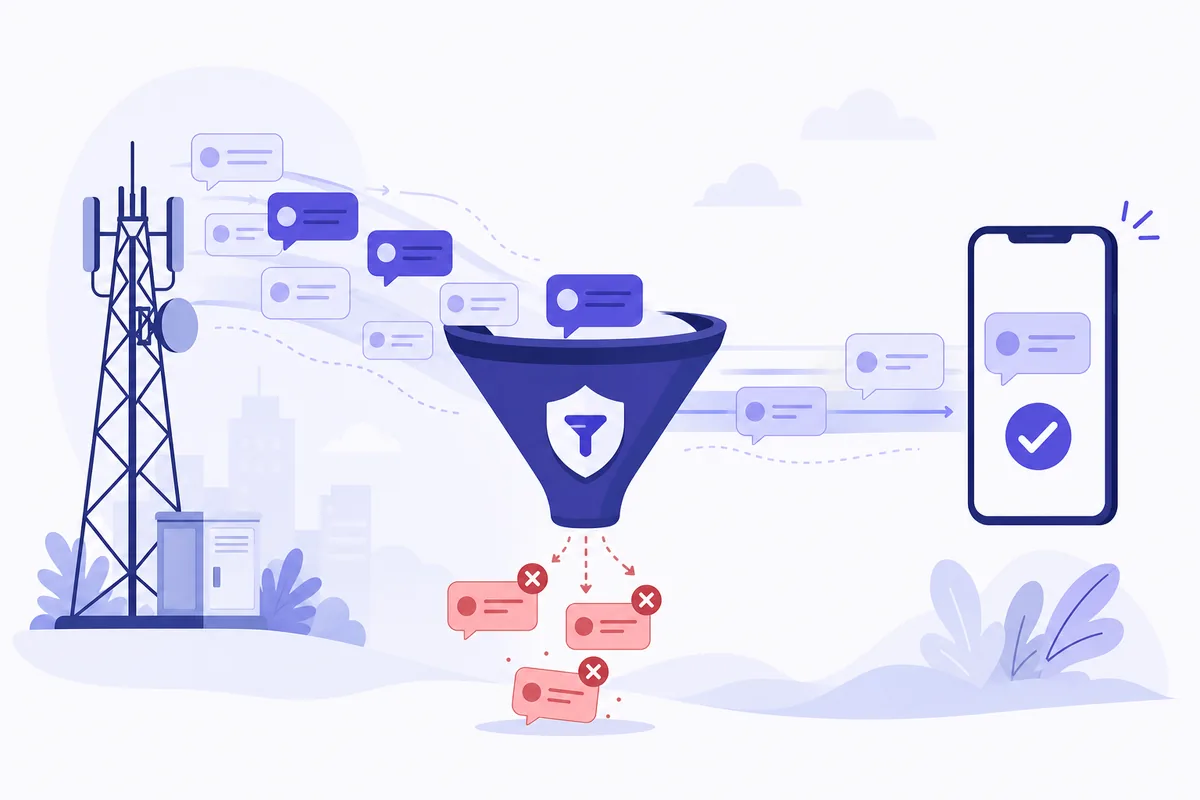
Your app fires off a verification code, the API returns success — and the user never sees it. The message wasn’t lost; a carrier filter quietly dropped it. Carriers stand between senders and phones as a spam-fighting checkpoint, and understanding what they look for is the key to getting your codes delivered.
1. Why carriers filter at all
Text messages are trusted and almost always read, which makes them a magnet for spam, scams, and smishing. To protect subscribers (and meet regulations), carriers run every message through filters that decide: deliver, silently drop, or block. A legitimate verification code can get caught in the same net as a scam blast — filters err toward caution.
The result is invisible to the sender: most filtering happens silently, so your API shows “sent” while the message never reaches the handset. That’s why “it says delivered but I didn’t get it” is so common.
2. What triggers a filter
| Signal | Why it’s flagged |
|---|---|
| Content | Spam trigger words, ALL CAPS, shady or shortened links |
| Sender reputation | History of spam complaints on that number/route |
| Volume & velocity | Sudden spikes look like a spam campaign |
| Unregistered sender | No 10DLC / sender-ID registration in that market |
| Grey routes | Traffic on unofficial paths gets blocked hard |
These overlap with the causes behind grey routes and low delivery success rates: filtering is the enforcement mechanism carriers use against risky traffic.
3. How to get through the filter
Deliverability comes from looking legitimate, not from brute force:
- Register your traffic: use 10DLC in the US, or approved sender IDs where required.
- Clean templates: avoid spam-trigger words, keep links minimal and branded, don’t shout in caps.
- Reputable routes: use official carrier-approved paths, never grey routes.
- Sane volume: warm up traffic gradually instead of sudden bursts.
- Monitor and adapt: track delivery by carrier and adjust when one starts filtering.
Resending the same message on the same route rarely helps — the filter will just catch it again.
4. What this means if you receive codes online
Carrier filtering happens on the sending side, between the app and the destination number, so it affects any recipient — including numbers used to receive codes online. If a service’s messages are being filtered toward a particular number range, no receiving method can conjure a message that was never delivered.
The practical takeaway for receiving: if an expected code doesn’t arrive, filtering upstream is a real possibility, and hammering “resend” often won’t fix it. A reputable receiving option won’t defeat sender-side filtering, but pairing it with a service known for good deliverability — and simply waiting a moment before retrying — beats rapid-fire resends that can trip velocity filters even harder.
FAQ
Q: Why does my SMS say delivered but never arrive? Carrier filtering is usually silent — the network accepts then drops the message for spam/fraud reasons, so your system logs “sent” while the phone gets nothing.
Q: Can I pay to bypass carrier filters? No legitimate shortcut exists. “Bypass” offers usually mean grey routes, which carriers block aggressively. The durable path is registration, clean content, and good routes.
Q: Does filtering affect verification codes specifically? Yes — OTPs can be filtered like any message, especially if unregistered, sent over grey routes, or containing risky-looking links. Registration and clean templates reduce this.
Takeaway
Carriers filter SMS to shield users from spam and fraud, and legitimate codes sometimes get caught in the same net — usually silently. The fix is looking legitimate: register your traffic, clean up templates, and use reputable routes; and when receiving, remember filtering happens upstream, so good deliverability beats frantic resending.