 SimSmsBox
 Quick answer: RCS (Rich Communication Services) is the modern upgrade to SMS — it adds read receipts, typing indicators, high-res media, and verified branded business messages over data instead of the cellular text channel. For verification codes, RCS mainly enables branded, verified sender identity and richer prompts, but plain SMS OTP isn’t going away: it’s the universal fallback that works on any phone, on any network, with no data connection.
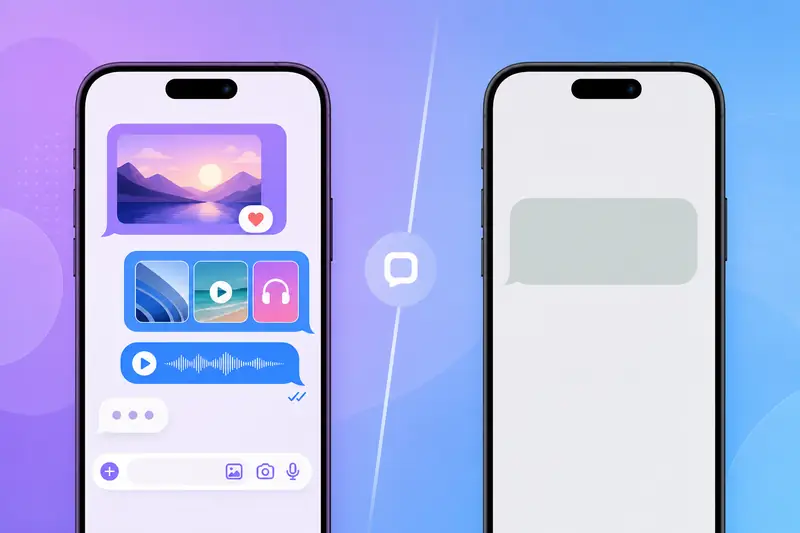
Your phone may already be sending “texts” over RCS without you noticing. As carriers and Apple adopt it, people ask whether RCS changes how verification codes work. Here’s the practical picture, and why it barely affects the way you receive an OTP code today.
1. What RCS actually is
RCS is a messaging protocol that runs over the internet (mobile data or Wi-Fi), designed to replace SMS/MMS as the default in the phone’s messaging app. Compared with SMS it adds:
- Typing indicators, read receipts, and reactions.
- High-resolution photos, video, and file sharing.
- Group chats with proper membership.
- Verified business messaging with a brand name, logo, and a “verified” checkmark.
2. RCS vs SMS for verification
| Factor | RCS | SMS |
|---|---|---|
| Needs data/Wi-Fi | Yes | No |
| Works on every phone | No (rolling out) | Yes |
| Branded/verified sender | Yes | No |
| Rich prompts (buttons, logo) | Yes | Plain text |
| Universal fallback for OTP | No | Yes |
The headline: RCS makes a verification message look more trustworthy (verified brand, no spoofed sender), but it can’t be the only channel because not every device or network supports it.
3. Why SMS OTP still wins for codes
- Universality: any phone that can receive a text can get an SMS code — no app, no data plan. That’s exactly why sign-ups still rely on it, as covered in receiving SMS online without a SIM.
- Fallback: even RCS-first systems drop back to SMS when RCS isn’t available, so the code still arrives.
- Simplicity: a 6-digit code needs no rich formatting.
RCS improves the experience and trust of business messages, but the OTP itself is the same shared secret — with the same interception risks as any SMS 2FA.
4. What changes for you
For everyday verification, RCS mostly means nicer, verified-looking messages from big brands. Practically:
- If you receive codes on an online number or a basic device, they’ll arrive by SMS — RCS support there is minimal.
- RCS’s verified-sender feature can reduce smishing, complementing good phone-number privacy habits.
- Whether a code comes via RCS or SMS, treat it as sensitive and never forward it.
FAQ
Q: Will verification codes move entirely to RCS? Unlikely soon. RCS needs data and broad device support; SMS remains the universal fallback for OTP.
Q: Is an RCS code more secure than an SMS code? The sender can be verified, which fights spoofing, but the code is still a shared secret. For real interception resistance, see passkeys vs SMS OTP.
Q: Do I need to enable RCS to get verification codes? No. If RCS is off or unsupported, codes fall back to SMS automatically.
Takeaway
RCS is a genuine upgrade for messaging — richer, verified, and friendlier — and it makes branded business texts look more trustworthy. But for verification codes, SMS OTP remains the universal workhorse because it reaches every phone on every network, so RCS complements rather than replaces it.