 SimSmsBox
Short answer: The simplest way to get a second phone number is to add a second line to the phone you already have. Most phones sold since 2018 support dual SIM, usually one physical SIM plus an eSIM, so you can buy a prepaid eSIM plan and run 2 numbers on one device. If you would rather not pay a carrier, a calling app such as Google Voice gives you a number over the internet, but those VoIP numbers are often refused for verification codes. For a single code you will never need again, a temporary number is enough. For anything you want to keep — work, banking, account recovery — choose a carrier number you control.
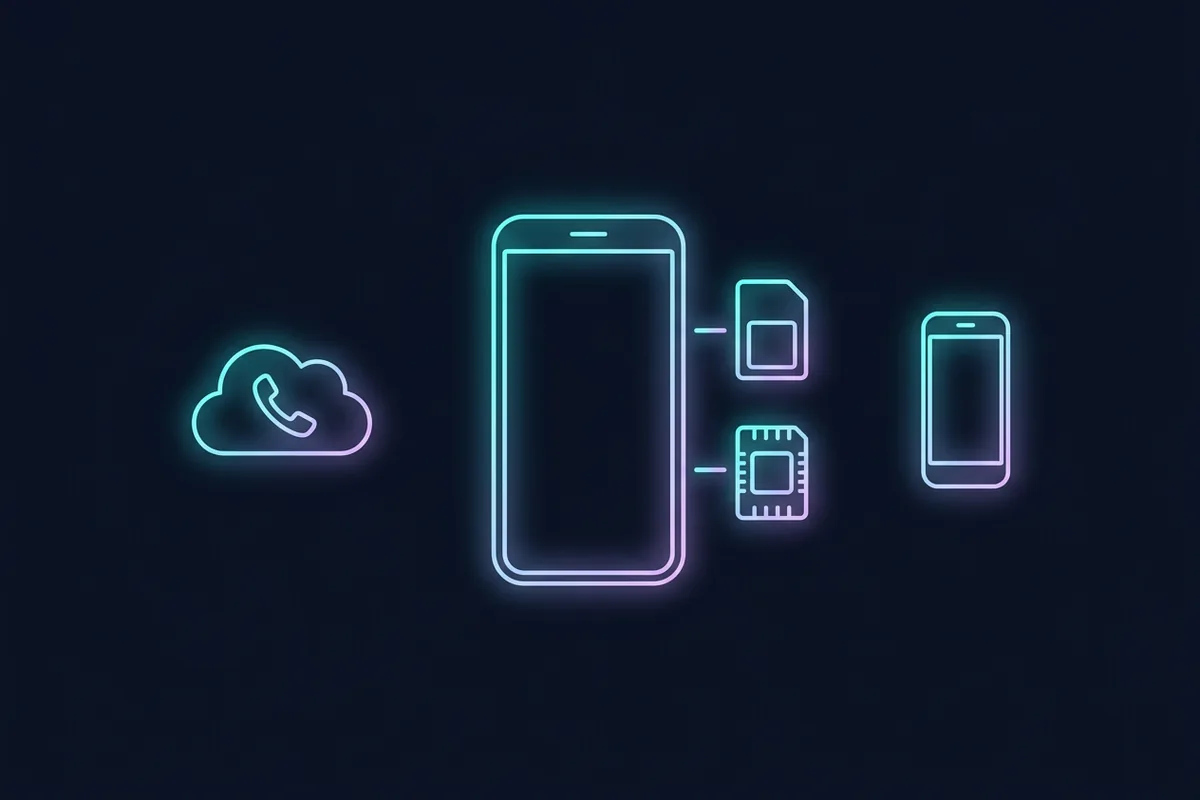
People look for a “second phone number” for different reasons: separating work from personal life, selling on a marketplace without giving out a personal number, keeping a home-country number while living abroad, or receiving one verification code. The right option depends on 2 questions: how long do you need it, and does it need to receive verification codes?
The 5 options at a glance
| Option | Typical cost | Receives verification codes | Calls | How long you keep it |
|---|---|---|---|---|
| Dual SIM / eSIM line | A prepaid or monthly plan | Yes, it is a mobile number | Yes | While the plan stays active |
| Carrier add-on line | Monthly add-on fee | Usually yes | Yes | While you pay |
| Calling app (VoIP) | Free to a few dollars a month | Often refused | Yes, over data | Can be reclaimed if unused |
| A second phone | Phone plus plan | Yes | Yes | While you pay |
| Temporary number | Cents per code | Yes, for one code | No | Minutes |
1. Dual SIM or eSIM on your current phone
This is the cleanest option for most people. A dual-SIM phone holds 2 lines at once, and both can receive calls and texts.
- iPhone: every model from the iPhone XS and XR (2018) onwards supports eSIM. An iPhone can store 8 or more eSIMs and use 2 numbers at the same time, and iPhone 14 and later models sold in the United States are eSIM-only.
- Android: most recent Google Pixel and Samsung Galaxy flagships support eSIM; many mid-range phones have 2 physical SIM slots instead.
- Adding the line: buy a plan that offers eSIM, then scan the QR code the carrier gives you — on iPhone under Settings → Cellular → Add eSIM, on Android usually under Settings → Network & internet → SIMs. Then choose which line is the default for calls, texts and data.
Because it is a real mobile number, it passes verification on nearly every service. The catch is that prepaid lines must stay active: many carriers reclaim a prepaid number after a few months without a top-up or any use. Using an eSIM for SMS verification covers the details.
2. A carrier add-on line
Some carriers sell a second number that rings on your existing phone, billed as an add-on to your current plan. Names and prices vary by carrier and country, so ask yours for a “second line” or “multi-number” add-on. It is convenient, but it stays tied to your main account: if you leave that carrier, the second number usually goes with it.
3. A calling app (VoIP number)
Calling apps give you a number that works over Wi-Fi or mobile data:
- Google Voice gives a free US number, but only to users in the United States, and you need an existing US number to set it up. Google may reclaim the number if you do not use it for about 3 months. See Google Voice for SMS verification.
- Paid apps such as Hushed or Burner sell numbers in several countries by subscription.
These work well for calls and for giving out a contact number. For verification codes they are unreliable: banks, payment apps and many other services check the line type and refuse VoIP numbers. What a non-VoIP number is explains the check.
4. A second phone
An old phone with a cheap prepaid SIM is the most separated option: work stays on one device, personal life on the other. It costs more and means carrying 2 devices, but nothing is shared — useful if you want to switch the work phone off completely in the evening.
5. A temporary number for a single code
If all you need is one verification code for a sign-up you will not use long term, a temporary number from an SMS platform is the cheapest choice: you pay per code, and the number goes back into the pool afterwards. Do not use one for an account you want to keep — when the number is reassigned, the recovery route goes with it. Temporary phone numbers explained and virtual phone number pros and cons cover where it fits.
Which one should you choose?
- Work and personal on one phone: an eSIM line.
- A number for a side business or a marketplace: an eSIM line, or a calling app if you only need calls.
- Keeping your home-country number while abroad: keep that SIM active as the second line and add a local eSIM for daily use. How to get a US phone number compares the options for +1.
- One code, once: a temporary number.
- Anything with money or account recovery: a carrier number you control, never a temporary one.
Before you start
- Check the rules of the services you sign up for. Many platforms allow more than one account per person, but each account you keep should have its own number. One phone number, multiple accounts explains the limits.
- Label the lines on your phone, for example “Work” and “Personal”, so you always know which one is sending.
- Add a recovery method that is not the number, such as an authenticator app or backup codes. Read moving an authenticator to a new phone before you switch devices.
Common questions
Can I have 2 WhatsApp accounts with 2 numbers? Yes. Since October 2023, WhatsApp on Android lets you add a second account in the same app, as long as each account has its own number.
Is a second phone number free? Calling apps can be free, with limits on who can get them. A real mobile line always costs something, even if it is only a small prepaid top-up to keep it active.
Will people see my main number when I use the second one? No. Calls and texts sent from the second line show the second number, as long as you pick that line for the call or chat.
Can a second number receive verification codes? A mobile line from a carrier, yes. A VoIP number from an app, sometimes. A temporary number, yes, but only for one code.
Wrapping up
For most people, the best second number is an eSIM line on the phone they already carry. Use a calling app when you only need calls, a temporary number when you only need one code, and keep anything important on a number you control.