 SimSmsBox
 Quick answer: A grey route is an unofficial, cost-cutting path a text takes to reach your phone — technically delivered, but outside the proper agreements between the sender and your carrier. Grey routes are cheaper for senders, which is why some use them, but they’re unreliable and often blocked: messages arrive late, get filtered, or vanish entirely. Many “code never arrived” problems trace back to a grey route being throttled.
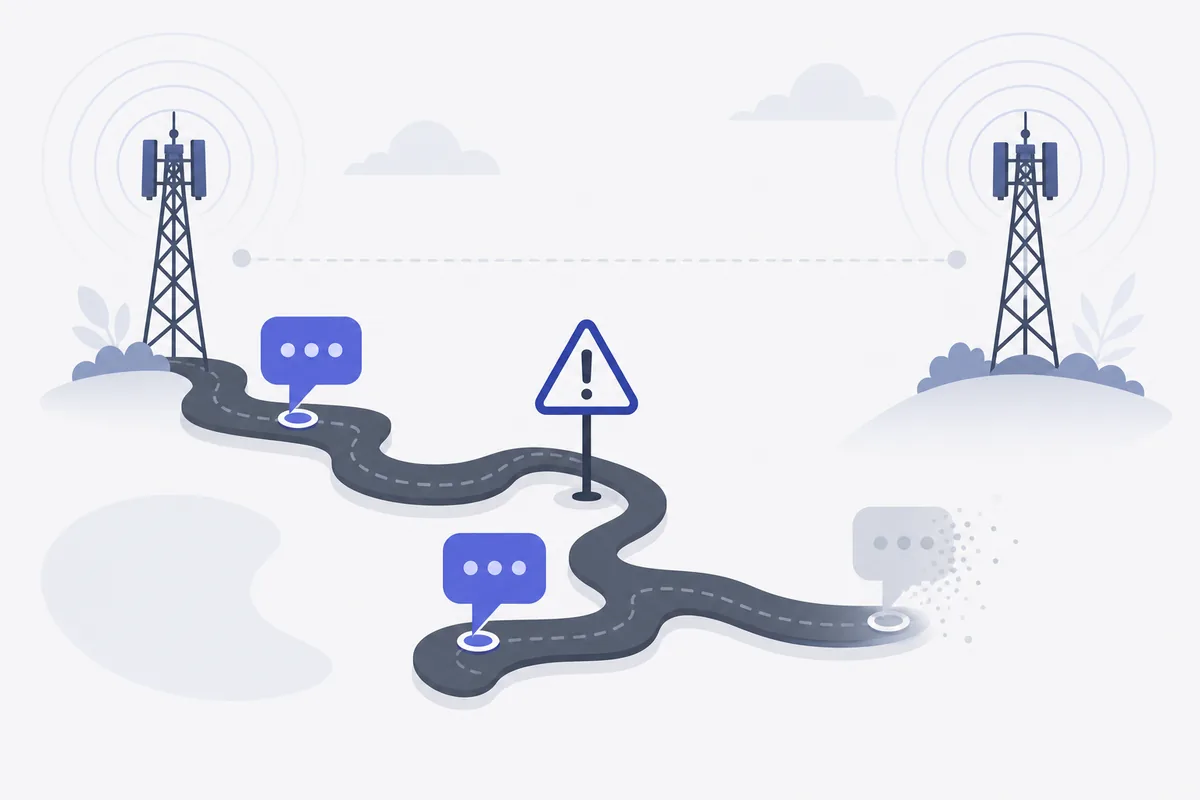
Every verification text is supposed to travel a legitimate, paid path from the service to your carrier. A grey route is the shortcut around that — a way to inject messages more cheaply by exploiting gaps between networks. It usually works until it doesn’t, and when it doesn’t, you’re the one staring at an empty inbox. Here’s how grey routes work and why they matter for code delivery.
1. What makes a route “grey”
Legitimate A2P (application-to-person) messages travel over agreements where the sender pays the terminating carrier. A grey route sidesteps that commercial deal — for example, by pushing bulk business traffic through channels meant for cheap person-to-person messages, or by hopping through a third country’s network to dodge fees.
The message may still be delivered, so it’s not “black” (outright illegal blocking); it’s “grey” — unauthorized but functional, until carriers detect and shut it down. It sits in the same fraud family discussed in what A2P SMS is and how proper routing is supposed to work.
2. Why senders use them — and why it backfires
The appeal is pure cost. Grey routes can be a fraction of the price of sanctioned A2P delivery, which tempts some low-cost providers. But the savings come with instability:
| Property | Legit A2P route | Grey route |
|---|---|---|
| Cost to sender | Higher | Much lower |
| Delivery reliability | High, consistent | Unpredictable |
| Latency | Seconds | Seconds to never |
| Carrier tolerance | Permitted | Actively blocked when found |
When a carrier detects a grey route, it filters or kills it — and every code riding that route suddenly stops arriving. That’s why a provider that “worked yesterday” can silently fail today.
3. How grey routes cause missing codes
If your verification code is late or absent, a throttled grey route is a leading suspect. The message was handed off cheaply, hit a filter, and got dropped. This is one of the concrete reasons behind the broader troubleshooting in why an SMS code doesn’t arrive — and it’s largely invisible to you, since nothing bounces; the code just never shows.
Quality of routing is a big part of why delivery reliability differs between providers, and it connects directly to improving verification success rates: a sender on clean, direct routes simply lands more codes.
4. What this means if you receive codes online
Route quality is exactly what separates a dependable online-number service from a flaky one. When you receive codes online without a SIM, you’re relying on the provider’s upstream connections — and a provider leaning on grey routes will show it as delayed or missing codes.
The takeaway when choosing where to receive codes: reliability is mostly about routing you can’t see. A number that consistently lands codes fast is one sitting on proper routes; persistent delays are a sign of grey routing upstream, and a reason to switch.
FAQ
Q: Is a grey route illegal? It’s unauthorized rather than always illegal — it violates commercial routing agreements. Carriers treat it as abuse and block it when detected.
Q: Can I tell if my code came via a grey route? Not directly. The symptom you see is indirect: codes that are frequently late or missing point to poor routing upstream.
Q: Why did a service deliver codes fine, then stop? A grey route it depended on was likely detected and blocked, cutting off delivery until the sender moves to another path.
Takeaway
A grey route is a cheap, unofficial detour for text messages — functional until a carrier notices and blocks it. Because grey routes get throttled without warning, they’re a hidden cause of late and missing codes, which is why reliable delivery comes down to a provider using clean, direct routes you never have to think about.