 SimSmsBox
 Quick answer: Two-step verification (2SV) and two-factor authentication (2FA) overlap so much that most people use the terms interchangeably — but there’s a subtle difference. 2FA strictly requires two different kinds of factor (something you know + something you have or are). 2SV just requires two steps, which could technically be two of the same kind (like a password plus a security question). In everyday use, both mean “one more check after your password,” and an SMS code is the most common second step.
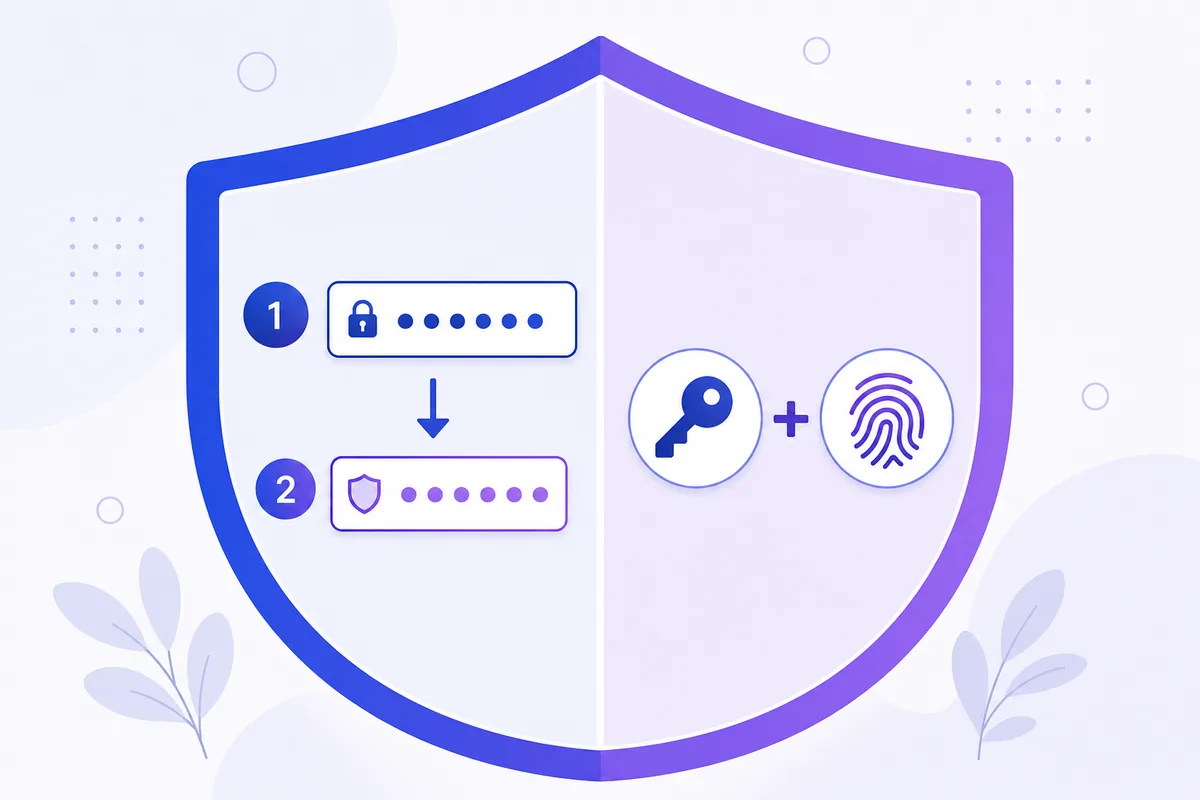
You’ll see “2-step verification,” “two-factor authentication,” and “2FA” used as if they’re identical — and 95% of the time it doesn’t matter. But the wording hints at a real distinction in what actually protects your account. Here’s the difference, and why in practice both usually come down to a code sent to your phone.
1. Factors vs steps
Security “factors” come in categories: something you know (password, PIN), something you have (phone, security key), and something you are (fingerprint, face). The distinction between the two terms is about categories:
- 2FA demands two factors from different categories — e.g. a password (know) plus a phone code (have). Two categories, genuinely independent.
- 2SV demands two steps, which usually are two categories too, but not strictly. A password followed by a security question is two steps of the same “know” category — technically 2SV, not true 2FA.
So all 2FA is 2SV, but not all 2SV is strict 2FA. That’s the whole distinction.
2. Why the difference matters (a little)
Two factors of different categories are stronger because an attacker has to defeat two unrelated things. Two steps of the same category are weaker — someone who phished your password might also guess your “mother’s maiden name.” That’s why security guidance nudges toward true two-factor, ideally with a possession factor like a phone or authenticator app.
| Two-step verification | Two-factor authentication | |
|---|---|---|
| Requires two… | steps | factor categories |
| Same-category allowed? | Yes (e.g. password + question) | No |
| Always true 2FA? | No | Yes |
| Typical second step | SMS code | SMS code, app, or key |
3. Why both usually mean “SMS code” in practice
Despite the theory, when a mainstream service turns on either one, the second step is very often a texted code — it’s universal, needs no extra app, and works on any phone. That’s the same reason SMS OTP endures against fancier methods. Google literally named its feature “2-Step Verification” while most people call the same thing 2FA.
Stronger options exist — authenticator apps, passkeys, hardware keys — but the SMS code remains the default second step precisely because everyone can receive one.
4. What this means if you receive codes online
Whether a service calls it 2SV or 2FA, the practical question is the same: what is the second step? If it’s a texted code, an online number can complete it — that’s what makes receiving codes online without a SIM work for these logins.
If the second step is an authenticator app, a biometric, or a hardware key, there’s no message to receive, so an online number isn’t part of that flow. When you can choose your second step, the “text me a code” option is the phone-number-based one an online service can handle.
FAQ
Q: Are 2SV and 2FA the same thing? Almost. Every 2FA is 2SV, but 2SV can technically use two steps of the same category (like a password + security question), which isn’t strict 2FA. In everyday use they’re treated as synonyms.
Q: Which is more secure? True 2FA (two different categories) is stronger than a 2SV that stacks two “know” factors. A possession factor like a phone code adds real independence.
Q: Is an SMS code 2FA? Yes — a password (know) plus an SMS code (have) is two different categories, which is genuine two-factor authentication.
Takeaway
2SV and 2FA describe nearly the same thing: an extra check after your password. The nuance is that true 2FA needs two different kinds of factor, while 2SV just needs two steps — but in practice both usually land on an SMS code, the universal second step an online number can actually receive.