 SimSmsBox
 Short answer: The universal format is E.164:
+, the country code, then the national number with the trunk zero removed, never exceeding 15 digits in total. Almost every “invalid number format” error is one extra zero or a country code entered twice.
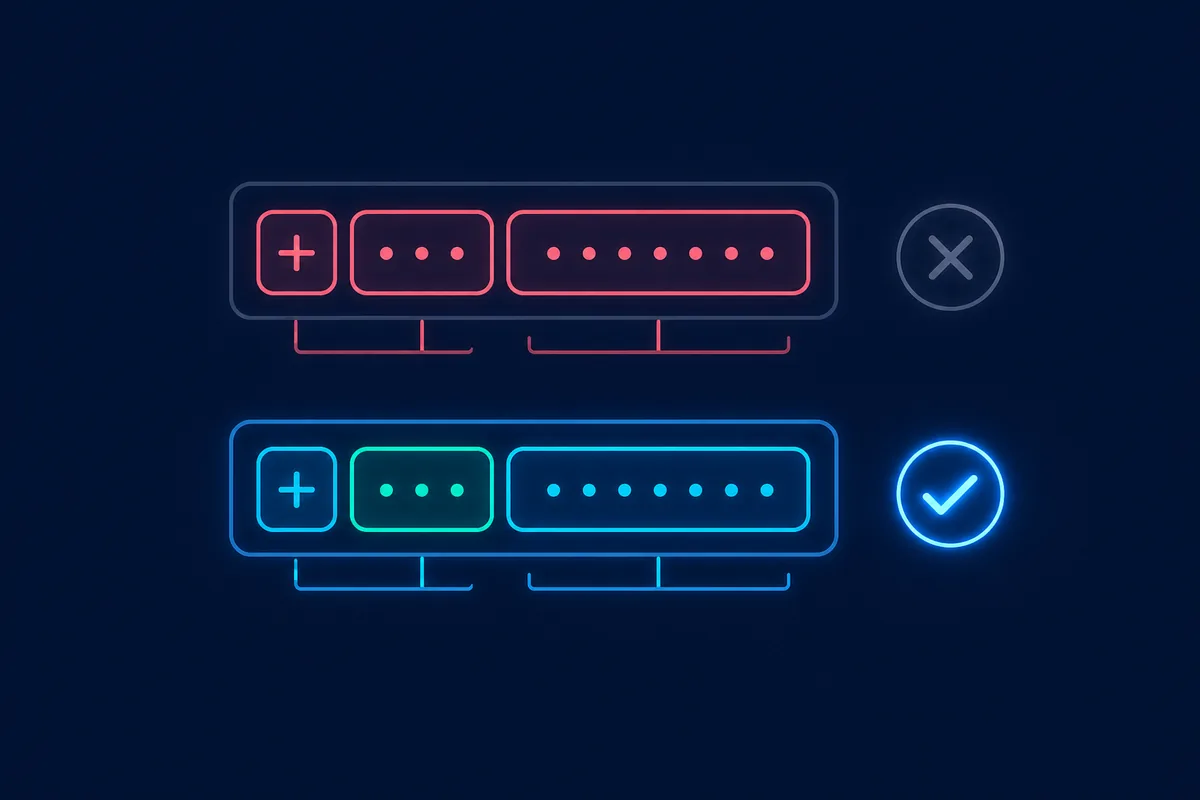
National numbering plans disagree about length, grouping, and prefixes. E.164 is the one convention every network and every signup form understands, so it is the only one worth memorising.
The three rules
- Start with
+. It means “a country code follows”. Where a form accepts digits only,00is usually treated the same way. - Country code next, one to three digits: +1, +44, +86, +852.
- Then the national number, minus the trunk prefix
0. Maximum 15 digits in total.
Skip spaces, brackets, and dashes. Most forms normalise them, but a few submit them verbatim and then reject the result.
Examples, and whether the zero goes
| Country | Local form | E.164 |
|---|---|---|
| US / Canada | (415) 555-0123 | +14155550123 |
| United Kingdom | 07700 900123 | +447700900123 |
| Germany | 0151 23456789 | +4915123456789 |
| France | 06 12 34 56 78 | +33612345678 |
| Japan | 090-1234-5678 | +819012345678 |
| Mainland China | 138 0000 0000 | +8613800000000 |
| Italy | 06 1234 5678 | +390612345678 |
The UK, Germany, France and Japan all drop the leading 0. US and mainland Chinese mobiles never had one. Italy is the well-known exception — landline numbers keep their leading zero. For the Chinese rules in detail see what is China’s country code; for the North American plan see what country is +1.
Six mistakes that cause rejections
- Country code twice. The dropdown already sets it and you type
+44again. - Keeping a zero that should go.
+44 07700 900123is invalid. - Dropping a zero that should stay. Italian landlines break without it.
- Using a domestic long-distance prefix. It has no meaning once you cross a border.
- Invisible characters from a paste. Non-breaking spaces and full-width
+both fail validation. - Exceeding 15 digits. Usually an extension number pasted along with the line.
Correct format, still no code
Format is only the first gate. Three more follow:
- Does the service stock numbers for that country at all?
- Is the international route filtered? See why carriers filter SMS.
- Is the line type refused? VoIP ranges are blocked outright — see what is a non-VoIP number.
The full checklist is in SMS not arriving on the platform, and forms that reject the number outright are covered in does the country code matter for SMS verification.
When you need an actual foreign number
Correct formatting still assumes you hold a real line. The four ways to get one are compared in how to get a foreign phone number; for a single code, a platform number is fastest — see overseas SMS verification tutorial.
Summary
+, country code, national number without the trunk zero, 15 digits maximum. Check the table above for whether your country drops the zero and format errors disappear. Anything still failing after that is a routing problem, not a typing problem.