 SimSmsBox
 Quick answer: Yes, the country code matters. Some services only accept numbers from certain countries, others reject numbers whose country doesn’t match your apparent location or IP, and delivery reliability varies a lot by country because routes differ. A code that works fine with a US number might never arrive on a number from another region — so matching the number’s country to the service’s expectations is often the difference between success and a silent failure.
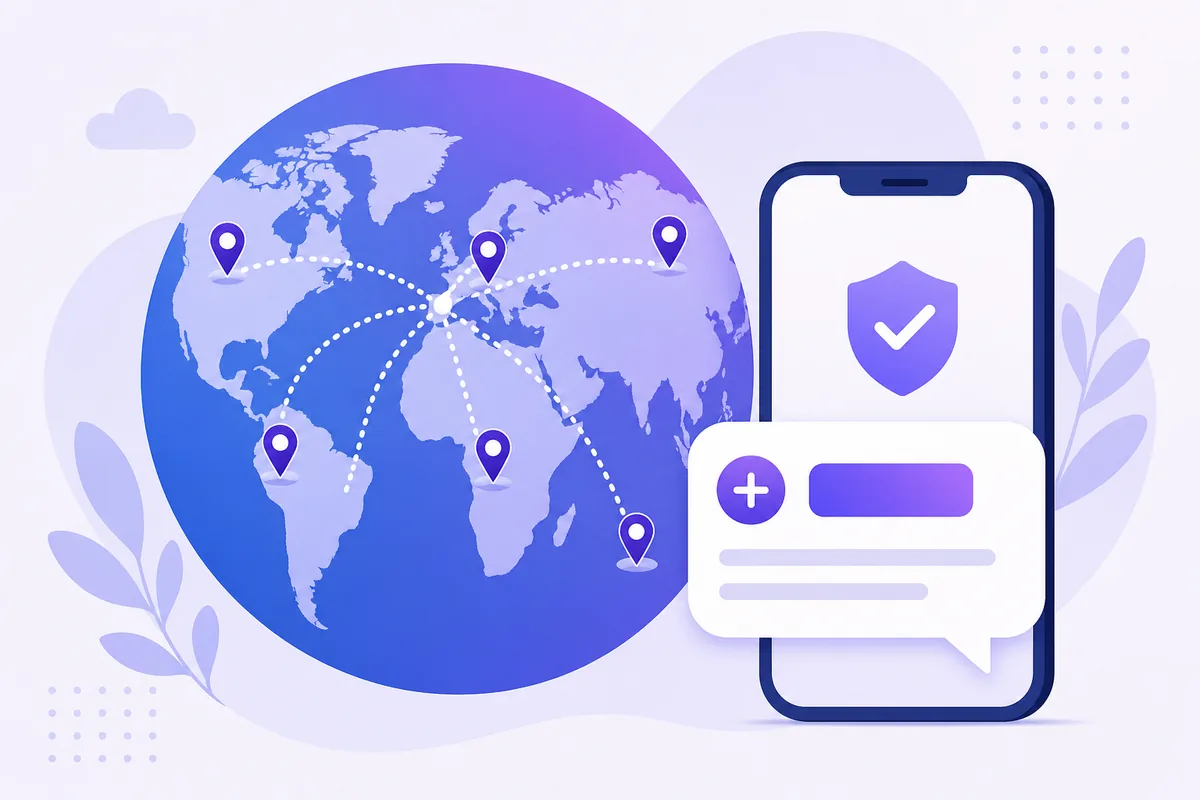
The little “+1” or “+44” in front of a number seems like a formality, but for verification it carries real weight. Services make decisions based on where your number is from, and delivery quality isn’t equal across borders. Here’s when and why the country code affects whether your code arrives.
1. Country restrictions on the service side
Many platforms limit which countries they’ll send codes to. Reasons range from regulation to fraud control to simply not operating in a region. You’ll see this as a phone field that rejects certain prefixes, or a code that’s never dispatched to an “unsupported” country.
This overlaps with number reputation and type: a service may accept a country in principle but still block particular ranges it associates with abuse, similar to how number reputation scoring works. So “which country” and “which number” both feed the accept/reject decision.
2. Country-vs-location mismatch
A common trip-up: your number’s country doesn’t match where you appear to be. If you sign up from one country’s IP using another country’s number, some services flag the mismatch as risky and refuse or challenge the verification.
| Situation | Likely result |
|---|---|
| Number country = your location | Smoothest |
| Supported foreign number, no location check | Usually works |
| Number country ≠ IP, strict service | Flagged / refused |
| Unsupported country | Never sent |
This is the same logic that causes region-mismatch problems on messaging apps, and it’s why “use any foreign number” isn’t a reliable strategy for strict platforms.
3. Delivery reliability differs by country
Even when a number is accepted, getting the code there depends on the routes between the sender and that country’s carriers. Some corridors are clean and fast; others are congested or lean on cheap grey routes that drop messages. So two numbers from different countries can have very different success rates for the exact same service — an aspect of improving verification success that’s often overlooked.
4. What this means if you receive codes online
This is exactly why a good online-number service offers numbers across many countries: you can match the number’s country to the service instead of hoping one number works everywhere. When you receive codes online without a SIM, picking the right country is a big lever on whether the code arrives.
The practical rule: choose a number from a country the service supports — ideally one consistent with where you’re signing up — and prefer countries with reliable delivery. If a code doesn’t arrive, switching to a better-matched country is often the fix, not resending to the same one.
FAQ
Q: Can I use any country’s number for any service? No. Services may restrict supported countries, flag country-vs-location mismatches, and deliver unevenly by region. Matching the country to the service matters.
Q: Why did my foreign number never get the code? Either the service doesn’t support that country, it flagged a location mismatch, or delivery to that country failed on poor routing. Try a supported, well-matched country.
Q: Does the country code affect delivery speed? Yes — routes to different countries vary in quality, so speed and reliability can differ significantly between number origins.
Takeaway
The country code matters: services restrict supported countries, flag country-vs-location mismatches, and deliver unevenly across regions. Success comes from matching the number’s country to what the service expects and favoring reliable corridors — which is why choosing the right country is one of the biggest levers when you receive codes online.