 SimSmsBox
 Quick answer: OTP bombing (also called SMS flooding) is when an attacker hammers “send verification code” against your phone number so your lock screen fills with OTPs. The goal often isn’t logging into your account — it’s harassment, chaos, or softening you up for phishing so you tap a bad link or read a code to a fake support agent.
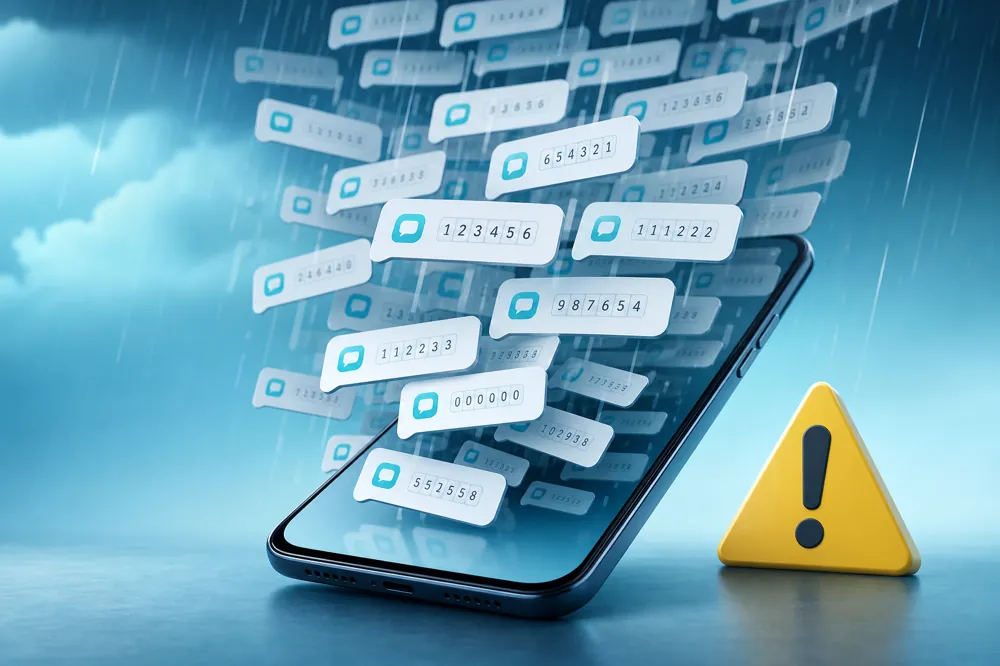
You aren’t signing into anything, yet texts keep arriving: “Your code is…”. That usually isn’t a glitch — someone pasted your number into other signup/reset forms, or abused an API with weak rate limits. Here’s what OTP bombing is, how it differs from account takeover, and what to do when it hits.
1. How OTP bombing works
The chain is simple:
- The attacker has (or guesses) your number.
- They submit it again and again on “send code” buttons across sites and apps.
- Those services actually send SMS — your phone gets spammed.
Some scripts rotate across dozens of brands, so you see codes from companies you’ve never heard of in a single minute.
2. What attackers want
| Motive | What it means |
|---|---|
| Harassment | Sleep disruption, unusable phone |
| Cover for social engineering | Mix bombing with smishing or fake support calls |
| MFA-fatigue cousin | Push you to approve or read out a code in the confusion |
| Recon | Probe which numbers belong to active users |
Important: bombing alone does not mean they already have your password. In most cases the codes land on your device and the attacker never sees them — unless they also use malware, a SIM swap, or trick you into handing a code over.
3. What to do when it happens
- Never read a code to anyone on a call or chat claiming to be support.
- Ignore the noise; don’t tap strange links while annoyed.
- Check security pages on important accounts for odd logins or half-finished resets.
- Where possible, move 2FA from SMS-only to an authenticator app or a security key.
- For sustained attacks, report spam to your carrier and tell the abused product their send-code endpoint is being flooded.
The right product fix is rate limiting (N sends per number per hour), CAPTCHAs, and risky-device checks. Unlimited send endpoints are bombing fuel.
4. Not the same as “code never arrives”
Not receiving a code is a delivery problem; OTP bombing is receiving too many. Fixes go opposite directions: one debugs filtering/delay, the other stops the flood and hardens against social engineering.
If you’re testing with an SMS verification platform, throttle your own retries too — aggressive resends can look like self-inflicted bombing and trip fraud systems.
FAQ
Does bombing mean I’m already hacked?
Not necessarily. More often your number was used elsewhere to click “send code.” Still verify key accounts for strange sessions.
Should I turn on airplane mode?
Mute or filter unknown SMS if you need peace. Long-term fixes are carrier reports, product rate limits, or changing numbers.
Will this burn my SMS plan?
Most verification SMS are free to receive, but the interruption is the real cost. Watch bills if international SMS are metered.