 SimSmsBox
 A GitHub search for “SMS platform” often turns up dashboards, SDK wrappers, and scrapers — not a ready-made stock of phone numbers. A working demo is not the same as reliable OTP delivery.
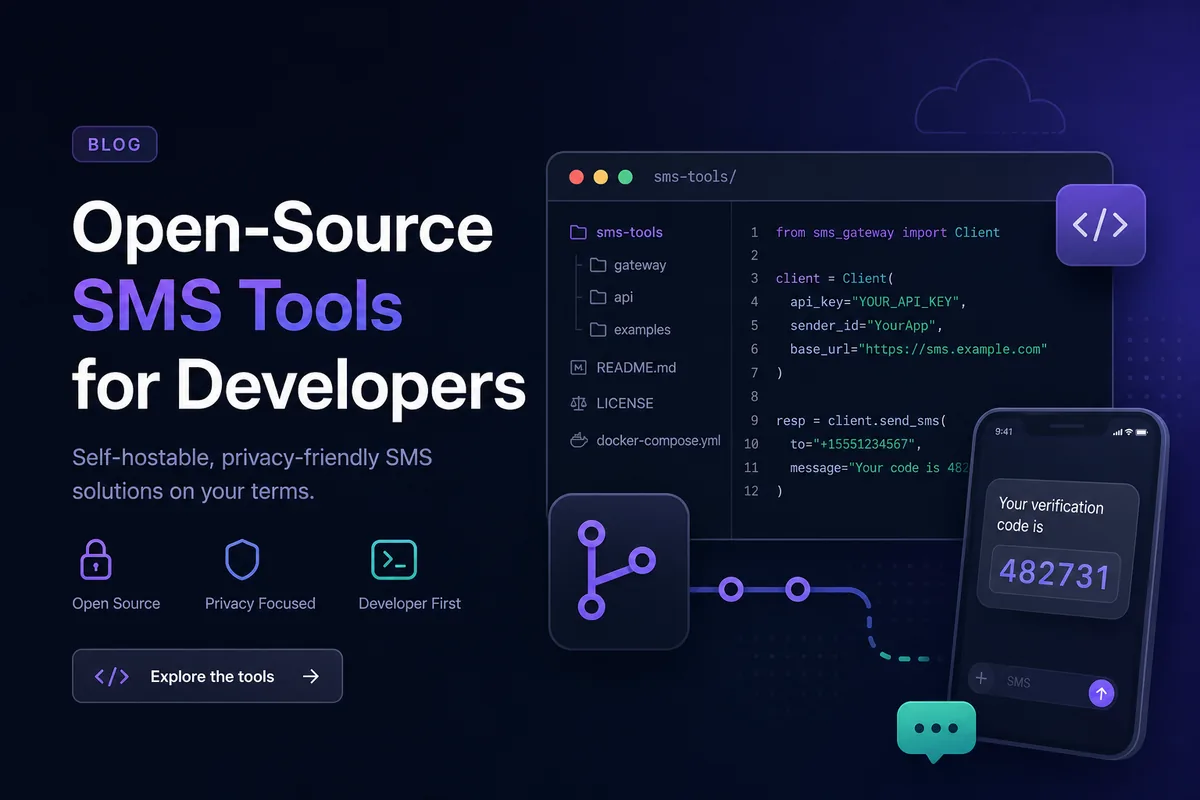
What you usually find on GitHub
| Repo type | What you get | Limitation |
|---|---|---|
| Receive-code dashboard demo | UI / order display | Empty without upstream numbers |
| Aggregator API wrappers | Client SDK for third-party APIs | Still needs a paid upstream account |
| SMS gateway / SMPP samples | Outbound messaging | Sends codes — does not receive them |
| Shared-inbox scrapers | Scraped public numbers | Low success, high abuse risk |
Can open source replace a provider?
- For learning APIs: yes — order, poll, webhook patterns are useful.
- As a long-term number source: no — SIM supply and carrier routes aren’t in the repo.
- Compliance risk: high for scrapers and unknown shared inboxes.
If you need reliable receive-code numbers, prefer a managed platform with real-SIM stock. See Real SIM vs virtual numbers and How to choose an SMS platform.
Self-host vs managed
Self-host fits when you already own SIMs/routes and need deep customization.
Managed fits when you want per-country ordering, API polling, and no SIM ops.
Developer flow: Automated ordering and polling.
Five checks before you clone a repo
- Does the README say where numbers come from?
- Is the project still maintained?
- Does the license allow your use?
- Are API keys hard-coded in samples?
- Does it promise “unlimited free numbers”? Usually unsustainable.
Wrap-up
GitHub is a learning and integration reference — not a free number supermarket. Delivery still depends on number quality and billing rules.