 SimSmsBox
 Some SMS platforms claim +86 China numbers. Stock is usually limited and expensive — and many overseas apps throttle China ranges. Match the number country to the target service first.
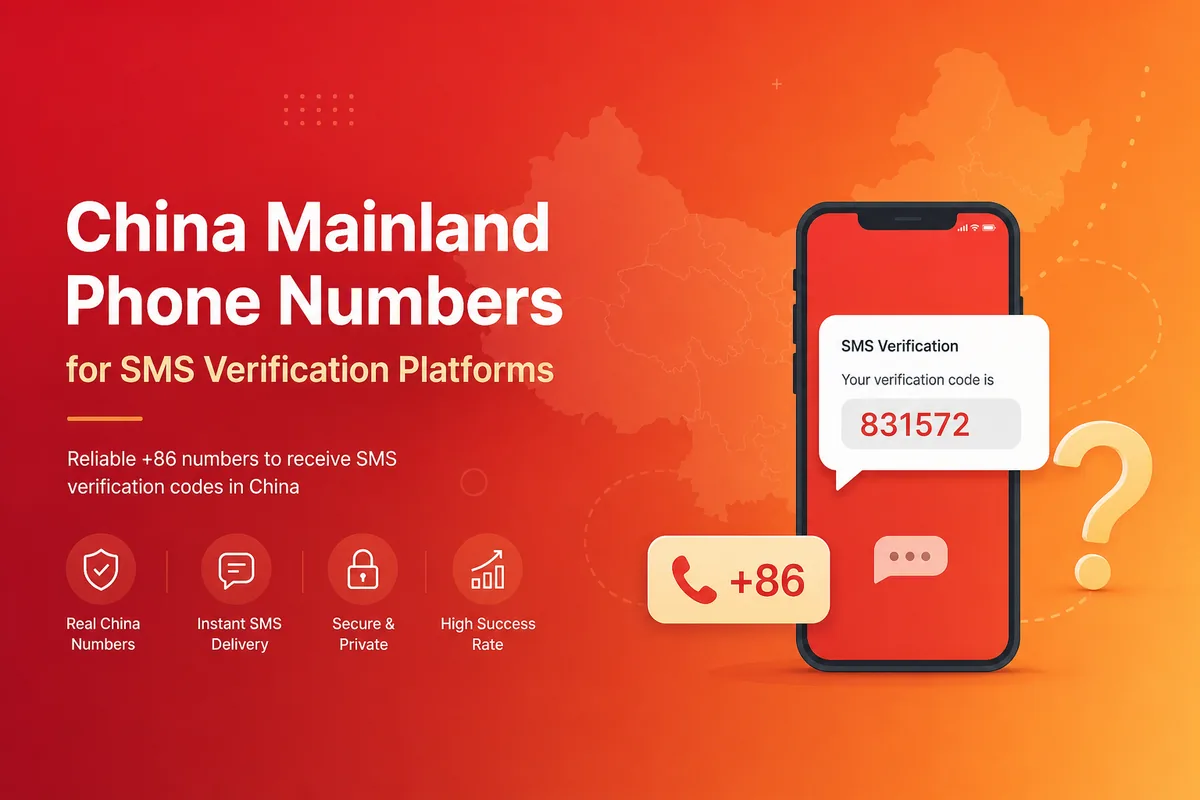
The reality of +86 receive-code numbers
- Available sometimes, but less stock than popular overseas ranges.
- Overseas apps may limit or reject +86.
- Enterprise “send SMS in China” gateways are not the same as receive-code numbers.
Related: Domestic vs overseas SMS platforms.
When +86 can make sense
- The site/app explicitly expects or prefers +86.
- You’re testing your own product’s China SMS arrival.
- Your use case is compliant with local rules.
When you should not force +86
- Signing up for overseas apps that prefer foreign ranges.
- You need high delivery and multi-country fallback.
- The provider only offers opaque “shared China inboxes.”
Decision order
- Confirm which ranges the target service accepts.
- If +86 is required: pick clear sourcing + refunds; small live test.
- If it’s an overseas app: prefer overseas real SIM + country alignment.
Wrap-up
“China phone number SMS platform” is a scenario question, not a yes/no trivia answer. Need +86 for local services; prefer overseas real SIMs for most foreign app verification. Tutorial: Overseas SMS verification tutorial.